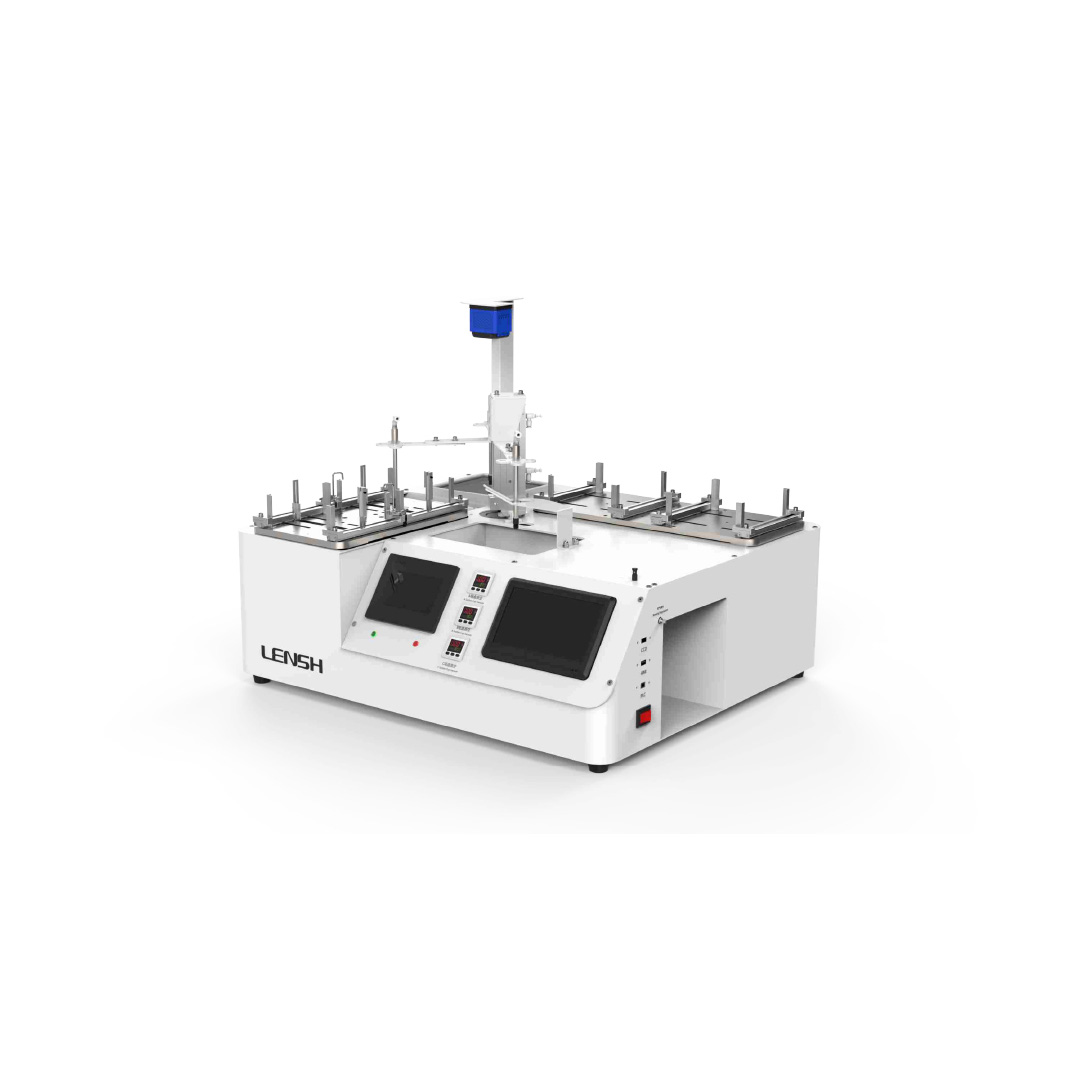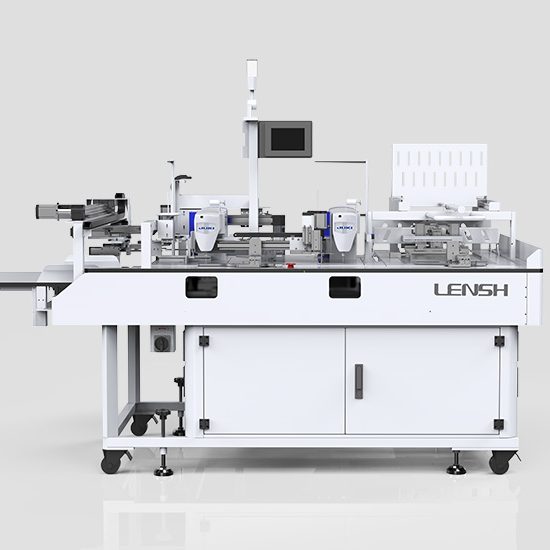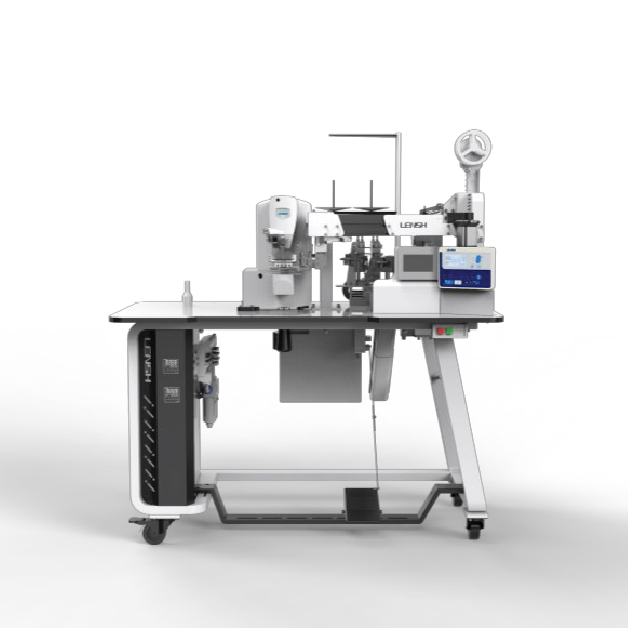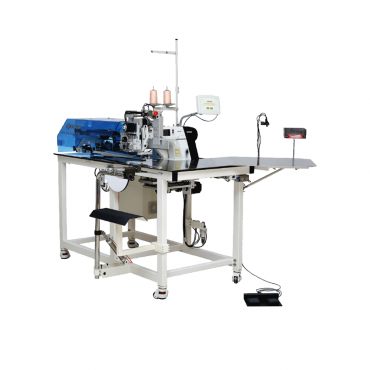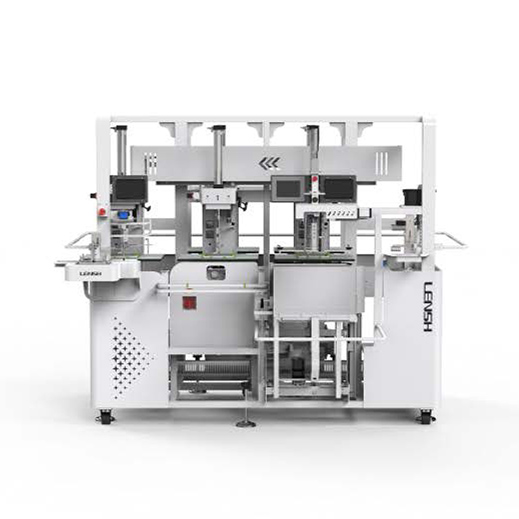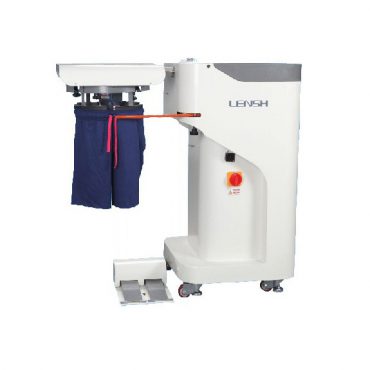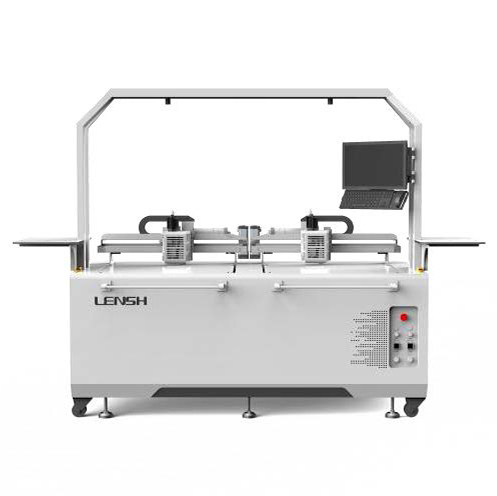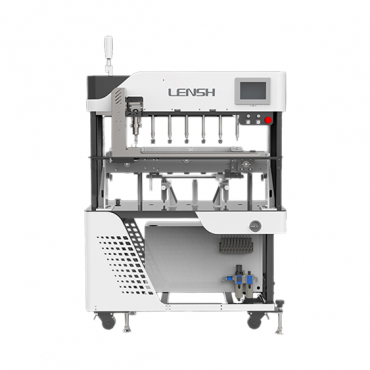
LS-6021/S/NP Automatic Drawcord Inserting Machine
- Description
Description
LS-6021 / LS-6021S / LS-6021NP Automatic Drawcord Inserting Machine
LS-6021 / LS-6021S / LS-6021NP Automatic Drawcord Inserting Machine
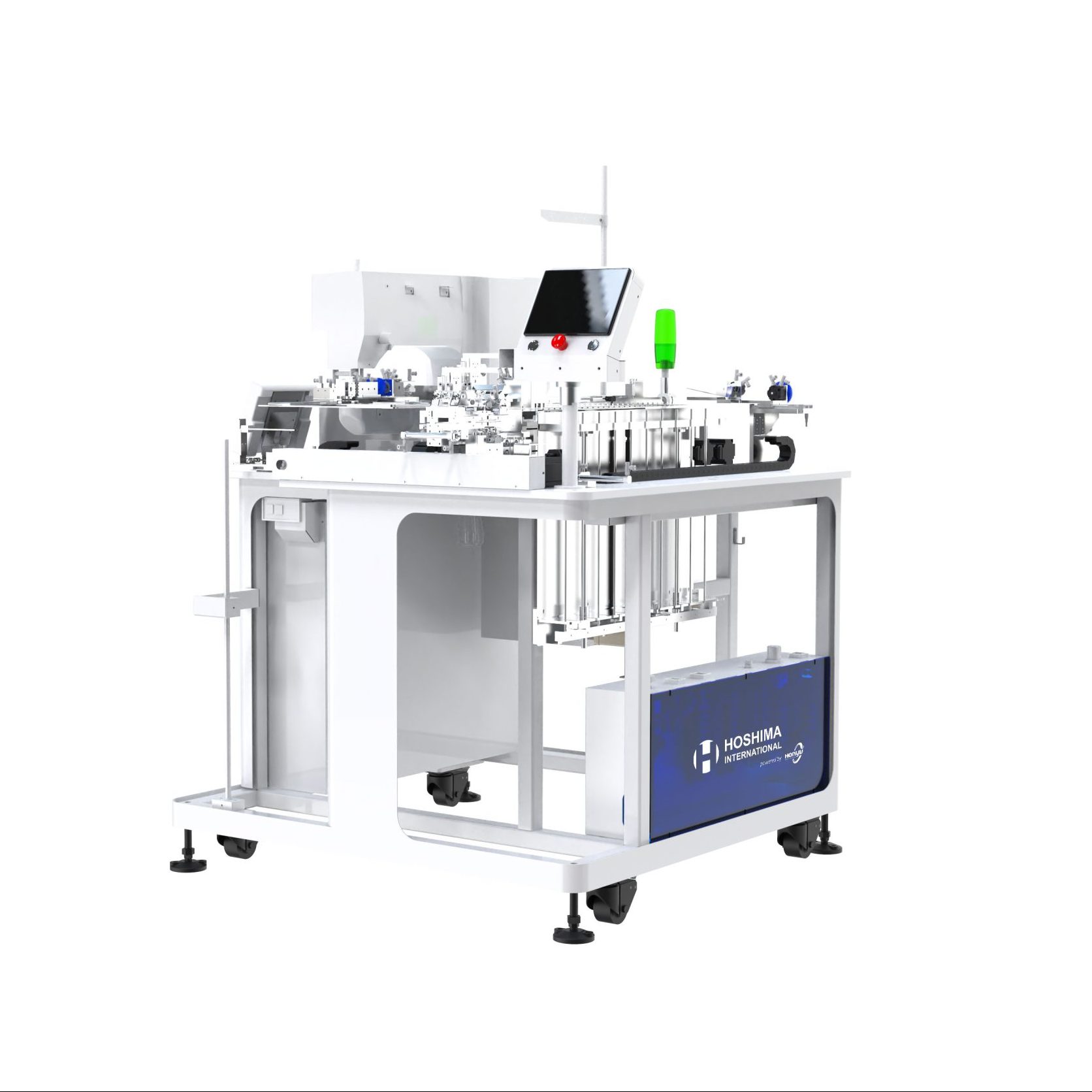
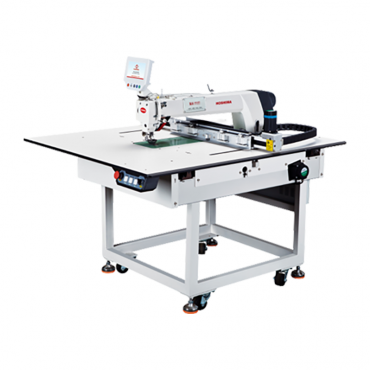
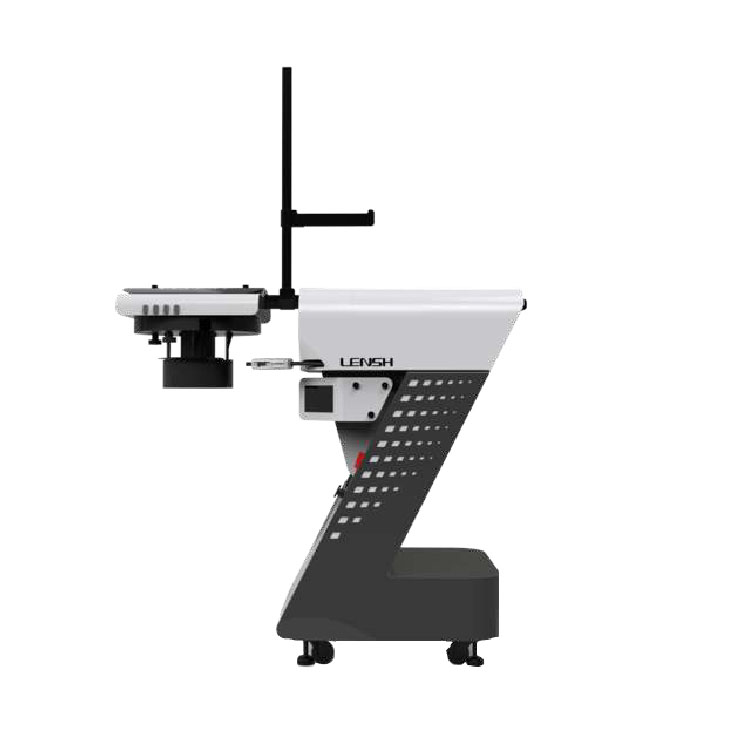
This machine line automates the process of inserting a drawcord through waistband holes — flat button holes, bird’s-eye embroidery holes, and metal air holes — replacing manual cord insertion, which is labor-intensive and time-consuming. The line comes in three versions, differing mainly in control method (hand or foot) and level of digitization:
- LS-6021 (Classic) — foot control, mechanical/analog control panel.
- LS-6021S (Digital Upgrade) — foot control, upgraded digital control panel.
- LS-6021NP (Hand Control) — hand control, designed for standing operation, with built-in intelligent programming.
📌 A note on terminology: this equipment is sometimes labeled a “string thrusting machine” or “stringing machine” in supplier catalogues — avoid searching for it that way, since those terms are dominated by badminton/tennis racket-stringing equipment in English-language search. The correct, unambiguous term is drawcord inserting machine (or “drawcord insert machine”).
Application
All three versions handle drawcord insertion through 3 common waistband hole types:
- Flat button hole
- Bird’s-eye embroidery hole
- Metal air hole
Common applications include drawcord waistband garments such as sweatpants, joggers, shorts, and trousers with adjustable drawcords.
Comparing the 3 Versions: Which One Should You Choose?
| Criteria | LS-6021 (Classic) | LS-6021S (Digital Upgrade) | LS-6021NP (Hand Control) |
|---|---|---|---|
| Control method | Foot control (pedal-operated) | Foot control (pedal-operated) | Hand control |
| Operating posture | Seated/standing depending on station layout | Seated/standing depending on station layout | Designed for standing operation, quick and efficient handling |
| Design philosophy | Humanized/ergonomic design, simple to operate | Builds on Classic, with control upgrades | “Subversive design” — a fundamentally different way of operating compared to the pedal-driven line |
| Electric module | Standard | Upgraded: electric modular design | Modularization of electronic control |
| Tube/wire mechanism | Standard | Integrated strip-tube design | Proceduralization of steel wire access control |
| Control panel | Mechanical/analog | Digital — displays capacity, speed, and warnings | Built-in intelligent size setting |
| Best suited for | Factories needing basic automation on a moderate budget | Factories needing real-time production monitoring via digital display | Factories prioritizing flexible standing operation, reducing reliance on continuous pedal use, needing quick size setup per batch |
📌 Since all three versions handle the same operation and share several core specs, factories should consult directly with the technical team to determine which version best fits: (1) budget, (2) existing operating habits at the factory (workers accustomed to pedal control vs. wanting to switch to hand/standing operation), and (3) how much real-time production monitoring is needed.
Technical Specifications
| Parameter | LS-6021S (foot control) | LS-6021NP (hand control) |
|---|---|---|
| Voltage | 220V, 50–60Hz | 220V, 50–60Hz |
| Power | 0.7kW | 0.7kW |
| Overall dimensions | 1140 × 580 × 1760 mm | 1220 × 600 × 1760 mm |
| Packing size | 1210 × 720 × 1440 mm | 1240 × 720 × 1320 mm |
| Net weight | 140 kg | 150 kg |
| Gross weight | 187 kg | 197 kg |
The LS-6021 (Classic) shares the same core mechanical platform as the LS-6021S, differing mainly in the control panel as noted above — confirm with your distributor if you need version-specific figures. Voltage and power are identical across versions; the main differences are in overall dimensions and weight, driven by the different control mechanisms (hand vs. foot).
Accessories & Consumables
Applies to all three versions.
| Item | Detail |
|---|---|
| Children’s wear accessory kit (TK01, optional) | Enables drawcord insertion on children’s trousers, minimum waist size 50cm |
| Standard bending steel wire needle (GS01) | Large head, compatible with holes larger than 7–8mm |
| Special bending steel wire needle (GS02) | Small head, compatible with 5–6mm holes |
Applicable Hole Types
Applies to all three versions.
| Hole Type | Minimum Applicable Size |
|---|---|
| Flat button hole | Cut ≥5mm |
| Bird’s-eye embroidery hole | Diameter ≥5mm |
| Metal air hole | Diagonal ≥5mm |
The machine supports various drawcord/rope types depending on product requirements — it’s best to provide a sample of the specific cord your factory uses so the supplier can confirm compatibility before ordering.
Real-World Efficiency: Before and After Installation
The manufacturer reports the same efficiency figures across the whole line, not broken out by hand/foot control version.
| Criteria | Before (manual insertion) | After (with LS-6021/6021S/6021NP) |
|---|---|---|
| Time per unit | ~20–32 seconds | ~9–12 seconds |
| Characteristics | High labor intensity, operator fatigue, low efficiency | Automated operation, reduced operator fatigue, high efficiency |
| Efficiency improvement | — | ~80–180% compared to manual insertion |
Frequently Asked Questions
Is this the same as a racket “stringing machine”? No. This is an industrial garment automation machine that inserts a drawcord through waistband holes on trousers and shorts. It is unrelated to badminton/tennis racket stringing machines, which is what “stringing machine” most commonly refers to in general English search.
How is a drawcord inserting machine different from an elastic waistband threading machine? This machine inserts a drawcord (cord) through waistband holes — button holes, bird’s-eye holes, metal air holes. This is a different operation from attaching an elastic band into the waistband seam, which typically uses a dedicated elastic-attaching sewing machine.
Should I choose hand control (LS-6021NP) or foot control (LS-6021/6021S)? Foot control suits factories already accustomed to pedal operation, freeing the hands to handle fabric. The LS-6021NP hand-control version is designed for standing operation, suited to factories wanting quick, flexible handling, easy movement between stations, or where workers aren’t used to continuous pedal use.
LS-6021 (Classic) and LS-6021S (Digital Upgrade) are both foot control — what’s the difference? Both are foot-controlled and share the same mechanical platform. The difference is in digitization level: the LS-6021S has a digital control panel displaying capacity/speed/warnings, while the LS-6021 uses a basic mechanical/analog control panel.
Can the machine insert drawcords on children’s trousers? Yes — with the optional TK01 accessory kit, all three versions support drawcord insertion on children’s trousers with a minimum waist size of 50cm.
What’s the difference between the GS01 and GS02 needles? GS01 is the standard needle with a large head, suited to holes larger than 7–8mm. GS02 is a specialized needle with a small head, suited to 5–6mm holes.
How is the 80–180% efficiency improvement calculated? It’s based on comparing average processing time per unit: roughly 20–32 seconds for manual insertion, reduced to roughly 9–12 seconds with the machine. This figure is reported by the manufacturer for the line as a whole, not broken out by hand/foot control version.
Contact Us For Quotation
Contact us in Southeast Asia - South Asia:
- Singapore: 7 Temasek Boulevard, #43-01A Suntec Tower One, Singapore 038987.
- Vietnam - Philippines - Thailand - Cambodia: Unit 1, 3rd Floor, Building H, Street 17, Tan Thuan Export & Processing Zone, Tan Thuan Ward, HCMC, Vietnam.
- India: Sy. No. 23/8, Ground Floor, Masthappa Layout, Near Yashas Vidya Kendra School, Somashettyhalli, Chikkabanavara Post, Bangalore - 560090 , Karnataka, India.
- Bangladesh: Mizan House, 6th Floor, Flat 6/A, House 6, Road 2, Lane 1, Block G, Halishahar H/E, Chattogram, Bangladesh.
- Phone: (+84) 0983 309 910 (WhatsApp, WeChat, Zalo)
- Email: marketing@hoshima-int.com
- LinkedIn | Facebook | YouTube: Hoshima International