Why You Need to Balance Your Sewing Line & 4 Key Implementation Steps
29/04/2026
Line Balancing is one of the core factors determining the efficiency and productivity of a sewing workshop. In the fiercely competitive environment of the textile and garment industry, optimizing production processes through line balancing is not just an option—it is a mandatory requirement for survival and growth.
I. What is Line Balancing in the Garment Industry?
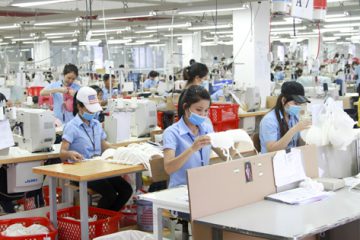
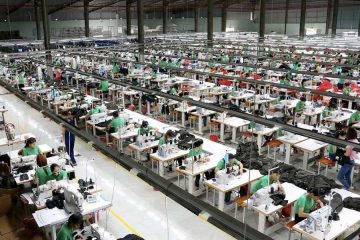
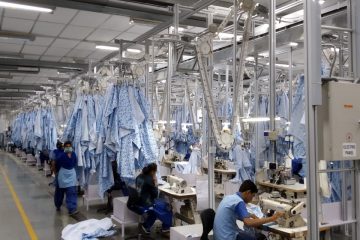
Line balancing in the garment industry is the process of scientifically and rationally distributing work elements (sewing operations) to each operator along a production line.
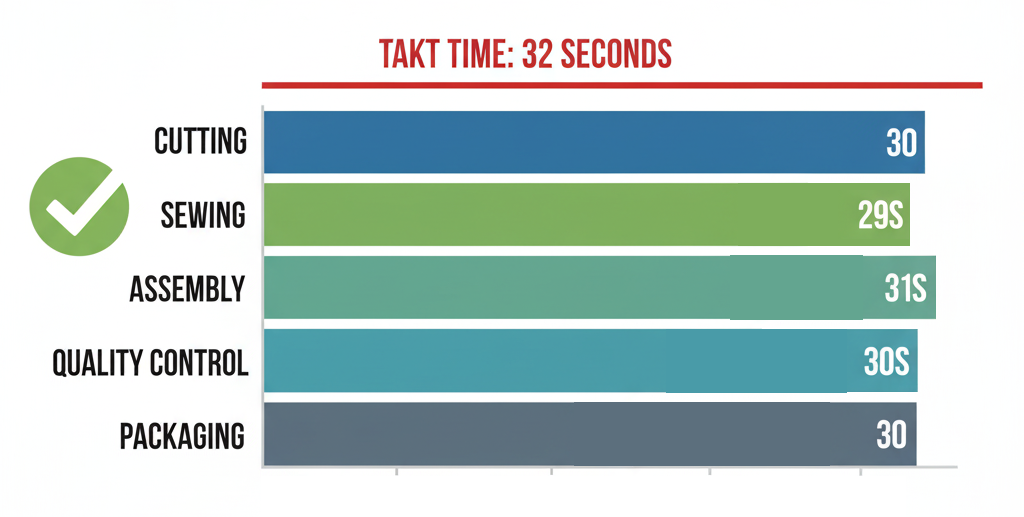
Objective: To ensure that the work content at every workstation on the line is equalized and aligned with the target production rhythm (Takt Time).
Why is Line Balancing Necessary?

The primary objective of line balancing is to dissolve bottlenecks and synchronize the workflow, eliminating the imbalance between overloaded workstations and idle waiting times.
The garment industry is characterized by a high diversity of styles and the complexity of sewing operations. If a production line is not balanced, it will lead to:
-
Bottlenecks: The slowest operation that dictates and restricts the speed of the entire production line.
-
Idle Waiting Time: Workers at subsequent workstations are forced to wait for semi-finished goods (WIP) from the bottleneck station.
-
High Work-in-Progress (WIP) Inventory: An accumulation of unfinished goods that hampers quality control management and creates logistical congestion on the floor.
II. Unlocking High-Impact Benefits through Effective Line Balancing
Proper line balancing unlocks outstanding improvements for the garment industry:
| Benefits | Explanation |
| 1. Significant Productivity Boost | Maximizing the working efficiency of each individual operator and the entire production line. |
| 2. Reduced Production Costs | Minimizing idle time and waste, which helps lower the unit cost of the product. |
| 3. Stabilized Material Flow | Semi-finished goods (WIP) move continuously without bottlenecks, making quality control easier to manage. |
| 4. Improved Working Environment | Workload is distributed evenly, reducing stress and overburden for the operators. |
| 5. Easier Training | Sewing operations are broken down into smaller tasks, allowing new workers to integrate and become proficient quickly. |
III. Basic Steps for Sewing Line Balancing
To achieve successful sewing line balancing, you should follow these essential steps:
Step 1: Operation Time Analysis and Takt Time Calculation
-
Operation Breakdown: Deconstruct the product into its smallest individual sewing operations or work elements.
-
Standard Time Measurement: Determine the precise execution time for each operation, typically measured in SMV (Standard Minute Value).
-
Takt Time Calculation: Establish the target production rhythm.
Step 2: Constructing the Precedence Diagram

Map out the sequence of operations: Create a diagram that illustrates the relationship and order between different work elements. Identify dependencies: Determine which operations must be completed first (sequential tasks) and which operations can be performed at the same time (parallel tasks).
Step 3: Grouping and Balancing
-
Work Allocation: Group individual operations so that their combined cycle time is as close as possible to the Takt Time for each workstation (one operator).
-
Visualization Tools: Utilize line balancing software or Bar Charts (Yamazumi Charts) to visualize workload discrepancies and make precise adjustments.
Step 4: Testing, Evaluation, and Adjustment
-
Pilot Implementation: Apply the new balancing plan to a trial production run.
-
Performance Assessment: Evaluate the actual speed and efficiency of each individual operator under the new setup.
-
Continuous Optimization: Fine-tune the allocation—such as reassigning tasks, adding/removing operators, or providing cross-training—until the optimal balance and flow are achieved.
IV. Technological Solutions: Line Balancing Software
In the modern era, technology has transformed line balancing into a faster, more precise, and data-driven process. Specialized production management software for the garment industry can:
- Automatically calculate Takt Time and SMV.
- Suggest balancing options based on real-time data.
- Instantly visualize bottlenecks through charts.
Conclusion:
Line balancing is far more than a simple organizational technique; it is a core philosophy of Lean Manufacturing. Investing in effective line balancing is a direct investment in the productivity, quality, and sustainable competitiveness of any garment enterprise.
Contact us for a consultation or to schedule a machine demo at our showroom:
- Phone: (+84) 0983 309 910 (WhatsApp, WeChat, Zalo)
- Email: marketing@hoshima-int.com
- LinkedIn | Facebook | YouTube: Hoshima International
Hoshima specializes in automation solutions for the garment industry, offering:
- Smart Warehousing
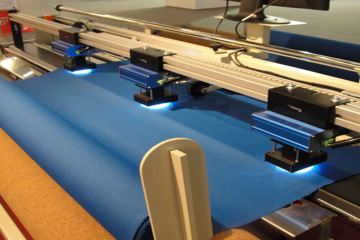
- Fabric Defect and Color Inspection
- Automated Cutting Line
- Sewing Technology
- Sub-process/ PPA Automation
- Finishing Technology
- Smart Logistic
-> Read more related articles: