Sustainable Apparel Manufacturing– The Golden Key to a Green Fashion Future
02/02/2026
The apparel industry, valued at over $3 trillion globally, has long been regarded as a massive economic “engine,” creating millions of jobs and meeting essential human needs. However, behind the glamour of trendy collections lies a harsh reality: the industry is facing unprecedented sustainability challenges. From the depletion of natural resources and severe environmental pollution caused by chemicals and waste to unfair labor conditions—all are calling for an urgent change.
In this context, automation emerges as a ray of hope, promising not only to enhance production efficiency but also to play a pivotal role in creating a sustainable garment future. This is no longer just an option; it is an essential path for businesses to survive, thrive, and create real value for society.
This article will take you on a deep journey into how automation is applied to sustainable apparel—from definitions and advanced technologies to superior benefits, challenges to overcome, and a vision for a green fashion industry in the future.
Sustainable Apparel: Definition and Core Requirements
To understand the role of automation, we first need to master the concept of sustainable apparel.
Defining Sustainable Apparel
Sustainable apparel is not merely about using eco-friendly materials. It is a holistic philosophy covering the entire product lifecycle—from design, raw material sourcing, production, transportation, distribution, and usage to recycling or disposal. The ultimate goal is to minimize negative environmental impacts, maximize social benefits, and ensure long-term economic viability.
Core Dimensions of Sustainable Apparel
To achieve sustainability, the garment industry must meet strict requirements across three main pillars:

-
Environmental:
-
Waste Reduction: From fabric scraps during cutting and sewing to post-consumer solid waste.
-
Resource Conservation: Reducing the consumption of water and energy; limiting the use of toxic chemicals in dyeing and finishing.
-
Pollution Control: Treating wastewater and emissions to standard levels before discharging them into the environment.
-
Use of Sustainable Materials: Prioritizing organic fibers, recycled or reused materials, or those from eco-friendly sources.
-
-
Social:
-
Fair Labor Conditions: Ensuring a living wage, a safe working environment, no child labor, and no discrimination.
-
Human Rights: Respecting the rights of workers and local communities.
-
Supply Chain Transparency: The ability to trace product origins from the farm to the store.
-
-
Economic:
-
Business Efficiency: Ensuring profitability to maintain operations and reinvest in sustainable initiatives.
-
Innovation: Encouraging research and development of new production technologies and processes.
-
Long-term Sustainable Development: Creating long-term value for the business and its stakeholders.
-
Automation: Key Technologies and Applications in Sustainable Apparel Manufacturing

The Fourth Industrial Revolution has brought a range of breakthrough technologies, becoming powerful “assistants” for the garment industry on its journey toward sustainability.
1. Robotics and Process Automation
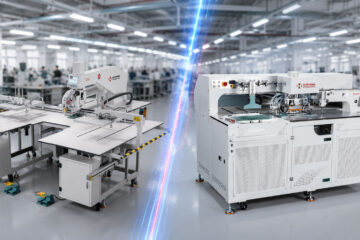
Industrial robots are no longer an image of the future; they are present in advanced garment factories today. They handle repetitive tasks that require high precision or are dangerous for humans.
-
Automated Fabric Cutting: Robots using laser or ultrasonic cutting technology can cut fabric with millimeter precision, optimizing nesting layouts to minimize fabric waste to the lowest possible level.
-
Automated Sewing: Robotic arms equipped with computer vision systems and sensors can perform complex sewing operations, ensuring consistent quality and high speed.
-
Handling and Transportation: Autonomous Guided Vehicles (AGVs) move raw materials and semi-finished products between stages, optimizing internal logistics and reducing damage and wasted time.
2. Artificial Intelligence (AI) and Machine Learning
AI serves as the “brain” of the automation system, providing superior analysis, prediction, and optimization capabilities.
-
Trend and Demand Prediction: AI analyzes market data and consumer behavior to accurately predict product demand, helping businesses produce the right quantity and avoid overstock—a major cause of waste in the fashion industry.
-
Optimized Design: AI supports pattern design and material usage optimization, even creating “virtual” designs to reduce the number of physical samples needed.
-
Smart Quality Control: AI systems with high-resolution cameras can detect fabric and sewing defects with accuracy far exceeding the human eye, reducing the rate of defective products that must be discarded.
-
Production Process Optimization: AI analyzes data from machinery to identify bottlenecks and suggest adjustments to improve efficiency and reduce energy consumption.
3. CAD/CAM Systems (Computer-Aided Design/Manufacturing)
CAD/CAM is the core technology and foundation for digital transformation in design and production.
-
Digitized Design: Helps designers create 2D/3D patterns on computers, significantly reducing the time and material used for physical prototyping.
-
Efficient Pattern Making and Nesting: CAM software automatically creates accurate patterns and optimized nesting, ensuring the most economical use of fabric and minimizing waste.
-
Seamless Coordination: From design to automated cutting machines, ensuring accuracy and synchronization throughout the process.
4. IoT (Internet of Things) and Smart Sensors
IoT connects devices and machinery in the factory, collecting real-time data to drive smart decision-making.
-
Energy and Water Monitoring: IoT sensors track the consumption of electricity and water by each machine and area, helping to detect waste and implement timely conservation measures.
-
Smart Inventory Management: RFID tags attached to raw materials and semi-finished products help track location and inventory levels accurately, reducing loss and ensuring timely supply.
-
Predictive Maintenance: Data from sensors allows for predicting when machinery needs maintenance, avoiding sudden breakdowns that cause production interruptions and resource waste.
5. Big Data and Data Analytics

The backbone for all smart decisions.
-
Supply Chain Analysis: Collecting and analyzing massive data from suppliers, manufacturers, and distributors to optimize the entire chain and identify environmental or social weak points.
-
Sustainable Performance Tracking: Assessing indicators for water, energy, waste, and emissions to determine sustainability levels and improve over time.
6. Blockchain
Provides unprecedented transparency and traceability.
-
Raw Material Traceability: Recording every transaction, from the origin of the fiber (organic, recycled) to dyeing, sewing, and shipping. This helps consumers trust a brand’s sustainability claims.
-
Ethical Verification: Ensuring that labor and environmental standards are strictly followed throughout the supply chain.
Superior Benefits of Applying Automation to Sustainable Apparel Manufacturing
Integrating automation is not just an investment; it is a powerful lever bringing countless benefits to businesses, the environment, and society.
1. Enhancing Production Efficiency and Product Quality
-
Increased Productivity: Robots and automated machines work continuously without fatigue, achieving significantly higher productivity than manual labor.
-
Reduced Lead Time: Automation processes help shorten production cycles, responding quickly to orders and market trends.
-
Uniform Quality: Machines perform tasks with high precision, minimizing errors and quality fluctuations between products.
2. Minimizing Environmental Impact

-
Material Savings: Optimized fabric cutting and nesting technologies help reduce fabric waste by up to 10-15%.
-
Reduced Energy and Water Consumption: IoT and AI systems monitor and optimize the use of energy and water during washing, dyeing, cooling, and drying stages.
-
Waste Control: Automation processes reduce defective products and limit excess inventory, thereby reducing the amount of waste to be treated.
-
Reduced Carbon Footprint: Optimizing internal transportation and the supply chain helps reduce CO2 emissions.
3. Improving Working Conditions and Enhancing Labor Skills
-
Labor Safety: Robots take over dangerous, heavy, and toxic tasks, reducing the risk of accidents for workers.
-
Comfortable Working Environment: Automated factories often have cleaner environments with less dust and noise.
-
Skill Upgrading: Workers are trained to operate, monitor, and maintain automated systems, moving from simple tasks to higher-value roles.
-
Protection of Rights: Data management systems and blockchain help track and ensure compliance with labor regulations.
4. Increasing Transparency and Traceability
-
Consumer Trust: With blockchain, consumers can scan QR codes to know exactly the material origin, production process, and sustainability certifications of a product.
-
Regulatory Compliance: Helps businesses easily prove compliance with environmental and social standards, avoiding “greenwashing” allegations.
5. Optimizing Resources and Long-term Costs
-
Efficient Inventory Management: AI and IoT help reduce unnecessary inventory, freeing up capital and storage space.
-
Reduced Operating Costs: Savings in energy and water, reduced material waste, and lower maintenance costs due to predictive systems.
-
Improved Profitability: Enhancing efficiency and reducing costs helps increase profit margins while building a sustainable brand image that attracts conscious customers.
Challenges and Solutions in Applying Automation
Despite the many benefits, implementing automation in sustainable apparel is not without its hurdles.
1. High Initial Investment Costs
-
Challenge: The cost of purchasing robots, smart machinery, AI software, and IoT systems can be very high, especially for small and medium enterprises (SMEs).
-
Solutions:
-
Phased Implementation Roadmap: Start with the stages that have the greatest impact or are easiest to automate.
-
Seeking Financial Support: Green investment funds, preferential loan programs from governments, or international organizations.
-
Leasing or Partnership Models: Instead of buying outright, businesses can lease technology or partner with solution providers.
-
2. Skill and Training Requirements
-
Challenge: A shortage of personnel with the skills to operate and maintain automated systems and analyze data.
-
Solutions:
-
Internal Training: Investing in retraining and upskilling programs for the existing workforce.
-
Cooperation with Educational Institutions: Partnering with universities and vocational colleges to develop appropriate training programs.
-
Attracting Talent: Recruiting experts with experience in technology and data.
-
3. Compatibility and System Integration
-
Challenge: Machinery and software from different vendors may not be compatible, making it difficult to integrate into a synchronized system.
-
Solutions:
-
Standardization: Choosing solutions that comply with open standards for easier integration.
-
Clear Digital Transformation Roadmap: Planning the overall strategy from the start, prioritizing systems with high connectivity.
-
Expert Consultation: Partnering with technology consulting firms experienced in the industry.
-
4. Changing Corporate Culture and Resistance
-
Challenge: Changing a traditional way of working can meet resistance from employees and even management who fear job loss or simply do not want to change.
-
Solutions:
-
Clear Communication: Explaining the benefits of automation, not just for the business but for the workers as well.
-
Support from Leadership: Leadership needs to be pioneering and show a strong commitment.
-
Employee Participation: Allowing employees to participate in the planning and implementation process so they feel part of the change.
-
The Future of Automation in Sustainable Apparel Manufacturing
The future of the garment industry will undoubtedly be tied to automation and sustainability. The following trends will shape the industry in the coming decades:
-
Significant Technological Advancements:

-
- Collaborative Robots (Cobots): Will become more common, working alongside humans to increase productivity and safety.
-
Smart Design with AI: AI will not only optimize but also create entirely new, environmentally friendly designs from scratch.
-
Lights-Out Factories: Factories operating with almost no human intervention, minimizing costs and production errors.
-
Smart Materials: The combination of technology and material science will create fabrics capable of self-repair, self-cleaning, or infinite recycling.
-
Driven by Policies and Regulations: Governments and international organizations will issue stricter environmental and labor regulations, creating pressure and motivation for businesses to invest in sustainable automation. Green transformation incentives and subsidies for businesses will become increasingly common.
-
Consumer Demand and Industry Cooperation: Consumers are becoming more aware of environmental and social issues and are willing to pay for sustainable, transparent fashion products. Cooperation between brands, technology providers, research organizations, and governments will be key to accelerating the transition.
Conclusion
Sustainable garment automation is not just a trend but a necessary revolution. It is the bridge between the need for economic efficiency and social and environmental responsibility. By leveraging the power of robotics, AI, IoT, and blockchain, the garment industry can overcome current challenges and create a future where fashion is not only beautiful but also kind, not only convenient but also sustainable.
This is the golden time for businesses in the garment industry to bravely innovate, invest in technology, and redefine their core values. Let us work together to build a fashion industry that not only keeps up with trends but also leads the way for a greener planet and a fairer society.
Are you ready for this revolution? Start your digital transformation and sustainability journey today to become a leader in the future of the garment industry!