Overview of the Garment Production Process (With Illustrative Diagrams)
15/05/2026To produce a complete garment product, manufacturers must establish a dedicated production process tailored to each type of product. For example, the production process for T-shirts is different from the process used for dress shirts. However, in general, every end-to-end garment production process includes several essential stages. Below, Hoshima introduces a standard garment manufacturing process used by modern factories.
Garment Production Process Standards and Requirements
To establish a high-quality production system that meets all product standards while optimizing costs, saving time, and increasing factory productivity, the apparel manufacturing process must adhere to the following requirements:
- Establish a streamlined sequential workflow and seamless integration between all departments and systems.
- Ensure synchronization and consistency: strictly adhering to original samples, utilizing uniform technology per production batch, and using only specified raw materials.
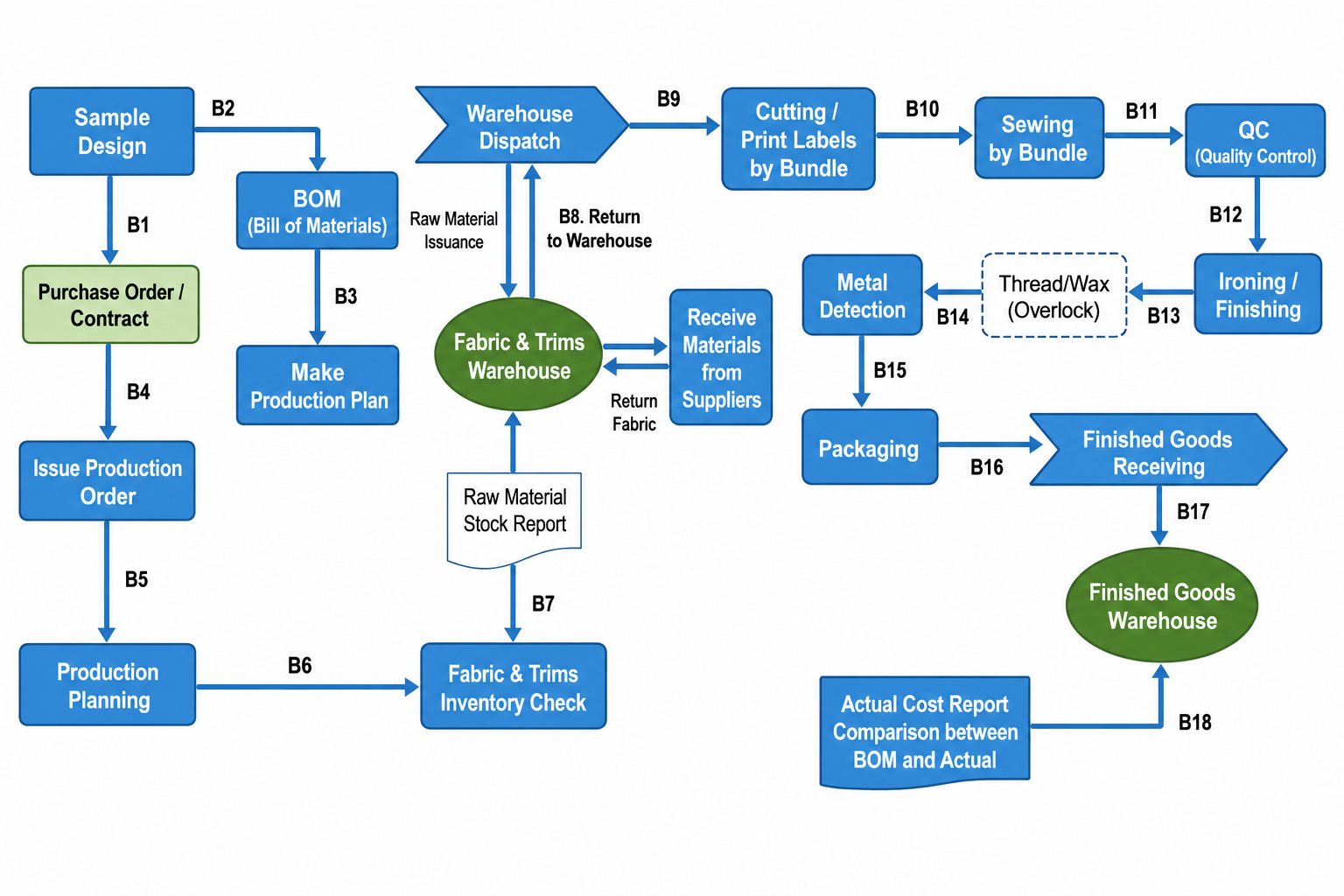
The Essential Steps in the Garment Production Process
1. Raw Material Preparation
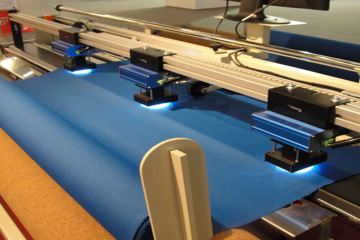
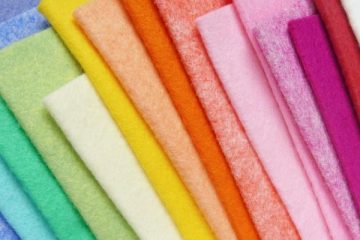
To ensure the production process runs smoothly, efficiently, and maintains consistent quality, the preparation stage is extremely important for every garment manufacturing company. After receiving a production order, each department within the factory carries out different preparation tasks. Some of the key activities include fabric preparation, fabric inspection, machine performance checking, and preparing design patterns and technical documents.
-> Learn more in detail: Material & Accessories Warehouse Procedure in Garment Factory | Step-by-Step Explain with Diagram
2. Pattern Making (Marker Planning)
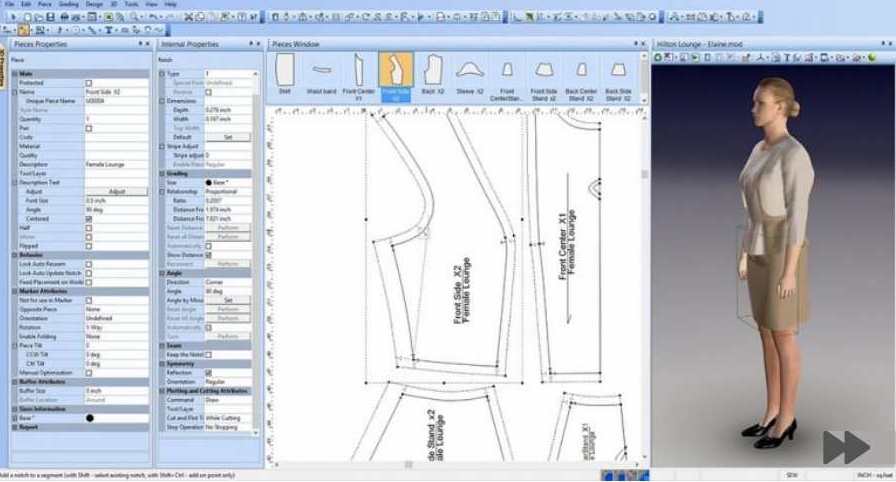
This is an important stage in the apparel manufacturing process because it creates the original pattern for the product. Marker planning involves arranging pattern pieces on the fabric in the most efficient way to reduce fabric waste as much as possible.
This stage also helps manufacturers calculate the exact amount of fabric needed for each order. Because of this, accuracy is extremely important. The operator must understand the design pattern, fabric width, and other technical specifications to determine the required fabric quantity and the number of fabric layers for spreading.
Today, modern pattern design software is gradually replacing traditional manual pattern-making methods. As a result, the process becomes simpler, more accurate, and much more time- and labor-efficient.
3. Fabric Spreading and Cutting Semi-Finished Products
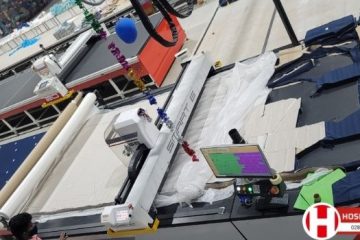
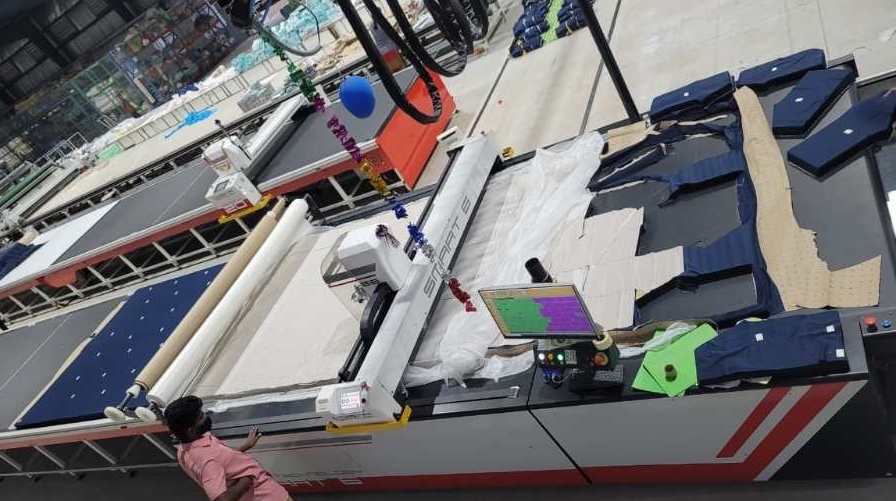
After completing the pattern design and marker planning stage, the next step in the Garment Production Process is fabric spreading based on the marker layout. Today, large garment factories use modern fabric lifting systems, automatic fabric spreading machines, and advanced spreading tables to achieve fully automated operations. In smaller factories, however, fabric spreading is still often done manually by at least two workers.
The next stage is fabric cutting. This process requires skilled operators to ensure every fabric piece is cut accurately and consistently. To reduce errors, save time, lower labor dependency, and improve fabric utilization, many manufacturers are replacing manual cutting methods and low-efficiency cutting machines with fully automatic fabric cutting systems.
Once the cutting stage is completed, manufacturers must inspect both the quantity and quality of the semi-finished products. This step ensures that all cut pieces meet the required standards, dimensions, and specifications before moving to the next stages of garment production.
-> Learn more in detail: Cutting Section Procedure in Garment Factory – From Planning to Cut Panel
4. Garment Sewing and Assembly
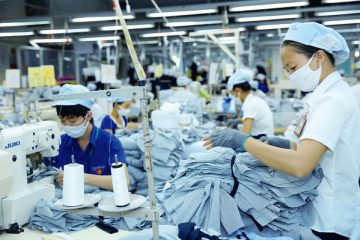
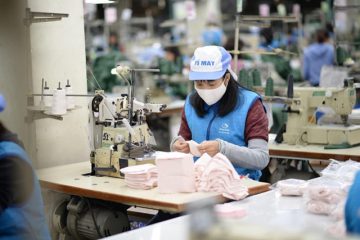
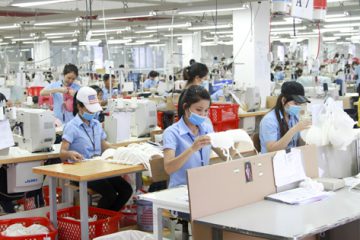
At this stage, sewing operators use the pre-cut fabric pieces and assemble them into finished garments. To ensure a smooth and efficient apparel manufacturing workflow, operators must strictly follow the original design specifications and garment construction requirements.
The sewing stage is typically divided into different production groups or sections, with each group responsible for a specific garment component such as collars, body panels, sleeves, and other parts. Today, many large garment manufacturers prioritize the use of automatic overhead conveyor systems to accelerate workflow efficiency and improve overall production management throughout the manufacturing process.
5. Garment Finishing
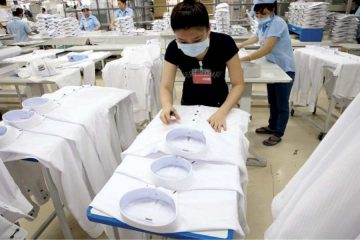
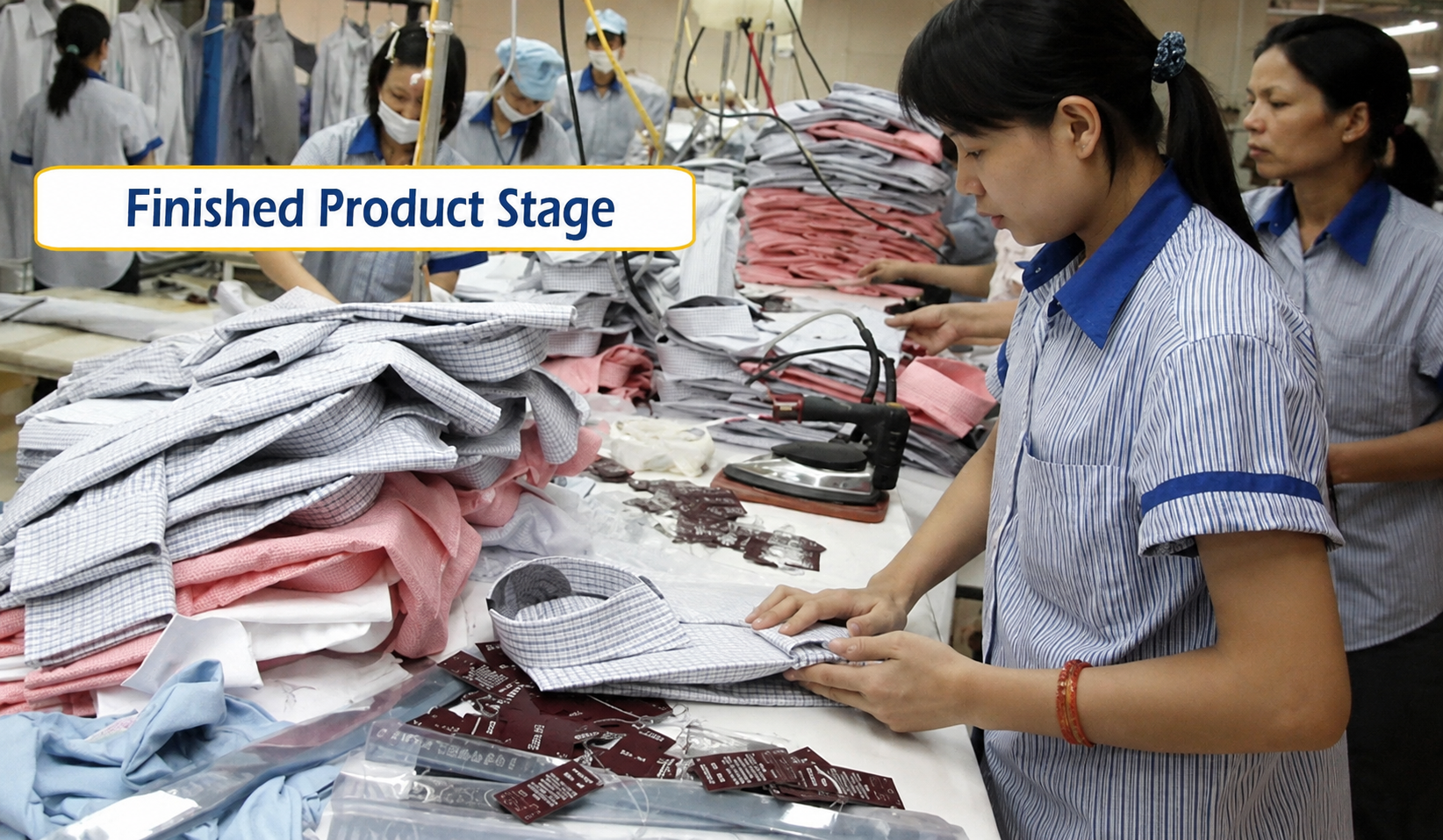
After sewing, the finished garments must be cleaned and pressed to enhance their appearance and overall quality. This finishing stage plays an important role in the apparel production workflow, as different fabric types require precise temperature control and accurate crease finishing to achieve the desired final look.
For large-scale manufacturing operations, manual ironing methods are no longer efficient. Instead, many factories adopt automatic tunnel finishing and pressing systems to improve workflow efficiency, save time, and ensure consistent product quality and aesthetics throughout the garment manufacturing process.
6. Quality Inspection
This stage focuses on evaluating the final garment quality before shipment. Manufacturers must ensure that all finished products meet the required specifications, are free from defects, and fully comply with the original design standards.
Quality control is a critical part of the processes for factory producing apparel, as it not only helps maintain product quality but also supports the evaluation of production performance, workforce efficiency, and operational risk management within the factory.
7. Packing and Shipping
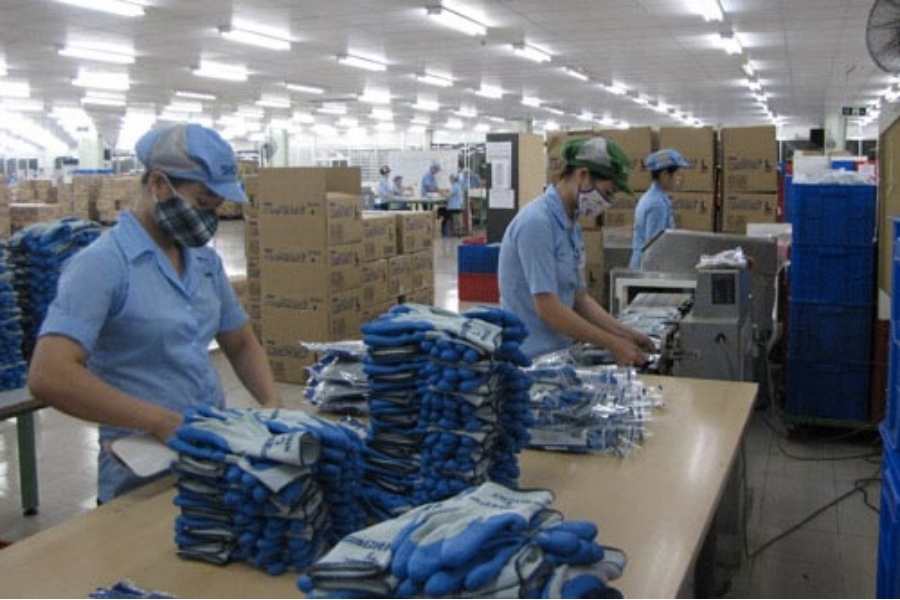
After inspection, garments are sorted by size and packed into cartons for shipment. Today, nearly every stage of apparel manufacturing can be supported by advanced automation systems to reduce dependence on manual labor and improve operational efficiency. At this stage of the production workflow, many large manufacturers have adopted automatic size sorting machines, carton forming systems, and automatic carton sealing systems to save time, increase productivity, and minimize errors before delivering products to customers.
A well-structured garment production process is essential for businesses to deliver high-quality products that meet all specifications and standards outlined in the contract. However, certain specialized products may require additional production stages depending on the product type, production plan, and factory scale of each manufacturer. The process above represents a fundamental end-to-end garment producing process commonly applied across most apparel products. Hoshima hopes this article has provided you with useful insights into the garment production industry.
Hoshima International is a trusted and exclusive supplier of garment manufacturing machinery in Vietnam, offering competitive pricing and comprehensive after-sales support services. The company provides a wide range of advanced solutions for the garment industry, including Shelton fabric inspection systems, C-Tex fabric inspection machines, C-Tex fabric relaxing machines, C-Tex color inspection systems, Cosma automatic fabric spreading machines, Cosma automatic labeling machines, Cosma automatic fabric cutting systems, automatic drawstring threading machines, bartacking machines, automatic cuff sewing machines, automatic placket sewing machines, automatic label pressing machines, programmable sewing machines, 2-in-1 overlock and coverstitch machines, automatic elastic joining machines, compact programmable sewing systems, automatic belt loop attaching machines, automatic button feeding systems, automatic button attaching machines, trouser hemming machines, waistband sewing machines, automatic pocket hemming machines, automatic pocket attaching machines, side seam hemming machines, automatic folding and packaging systems, RFID solutions, automatic tunnel finishing systems, AGV robots, and INA automatic overhead conveyor systems.
Please contact us for the best consultation and support.
Contact us for a consultation or to schedule a machine demo at our showroom:
-
Phone: (+84) 0983 309 910 (WhatsApp, WeChat, Zalo)
-
Email: marketing@hoshima-int.com
-
LinkedIn | Facebook | YouTube: Hoshima International
Hoshima specializes in automation solutions for the garment industry, offering:
- Smart Warehousing
- Fabric Defect and Color Inspection
- Automated Cutting Line
- Sewing Technology
- Sub-process/ PPA Automation
- Finishing Technology
- Smart Logistic