What Is a Special Purpose Machine (SPM)? Operation-Specific Automation Solutions for Garment Factories
11/08/2026
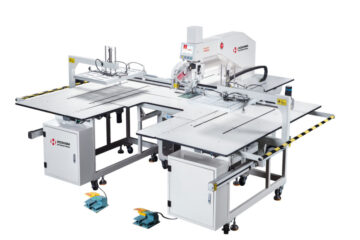
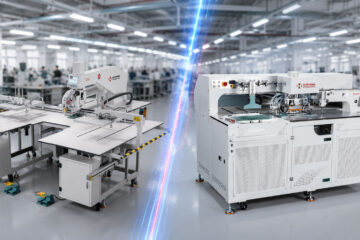
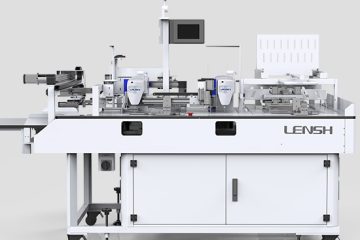
A Special Purpose Machine (SPM) is a machine engineered specifically to automate exactly one fixed operation in the garment production process — rather than handling a wide range of stitch types like a standard industrial sewing machine. More and more factories are adopting this investment approach to address rising labor costs, skilled labor shortages, and increasingly strict quality requirements from international buyers.
📖 For a deeper look at the definition and how an SPM differs from a standard sewing machine, see: “What Is a Special Purpose Machine (SPM)? How It Differs From Standard Industrial Sewing Machines”
The Common Operating Mechanism Behind SPMs
Although each SPM uses a different core technology, they all share one thing in common: they integrate a dedicated mechanism on top of a programmable sewing machine or basic industrial equipment base, eliminating dependency on manual skill for that specific operation. Common dedicated mechanisms include:
| Technology group | How it works | Example operation |
|---|---|---|
| Semi-automated jig – fixture – template | Positions, holds, and guides fabric according to a fixed pattern | Elastic waistbanding, multi-needle sewing |
| AI visual recognition camera | Automatically detects the fabric part and calculates the processing path based on its actual shape | Seamless glue bonding, logo inspection before/after pressing |
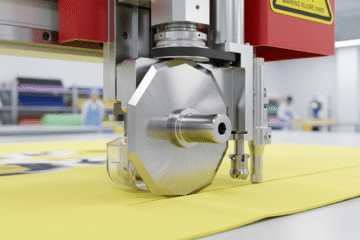
| Laser cutting/processing | Precisely cuts open fabric using a high-power laser beam | Pocket welting |
| Heat mold pressing | Heats and presses consistently according to a fixed mold | Zipper pre-treatment, logo/label pressing |
| Ultrasonic joining/welding | Locally melts and fuses material without needle or thread | Multi-layer label joining |
Why Invest in an SPM Instead of Continuing with Manual Labor?
- Labor costs rise steadily over time, while machine cost is largely a one-time investment.
- Consistent quality, not dependent on operator skill or focus varying shift to shift.
- Output isn’t limited by manual handling speed, particularly important when scaling up for urgent orders.
- Meets strict quality standards required by international brands demanding high precision.
📖 See the detailed analysis of each reason in: “Why Invest in Special Purpose Machines Over Manual Labor?”
Common Operations Being Automated Today
Below are real-world operations that already have dedicated SPM solutions on the market, along with their documented productivity gains:
| Operation | Common problem when done manually | Productivity gain |
|---|---|---|
| Zipper pre-treatment before sewing | Wavy seams due to unstretched zipper tape | ~350% |
| Glue bonding for seamless garments | Misaligned glue path, uncontrolled precision | ~210% |
| Chest logo/neck label pressing | Misaligned logo, defects only caught after completion | ~300% |
| Multi-layer label joining | Misaligned thin label layers, slow processing | ~600% |
| Elastic waistbanding | Uneven elastic tension, requires high skill to position | Reduced to 12–15 seconds/piece |
| Pocket welting (jeans, trousers) | Crooked pockets, torn fabric at the cut point | Varies by process, 20–45 seconds/pocket |
⚠️ Note: the figures above are manufacturer-published performance data for specific machine models and may vary based on actual operating conditions at each factory. See the detailed breakdown of how these figures are measured in: “Case Study: How Much Did Output Increase After Switching to a Special Purpose Machine?”
Which Operation Should You Automate First?
Avoid investing across multiple operations at once. Prioritize in this order:
- The operation with the highest defect rate when done manually — this is typically where an SPM delivers the clearest value.
- High-volume, frequently repeated operations — ensuring the investment cost is recovered within a reasonable timeframe.
- Operations where skilled labor is hard to hire or retain — an SPM reduces hiring pressure at this specific step.
- Operations that directly affect quality standards for major buyers — prioritize this if your factory targets premium export orders.
📖 See the specific payback calculation method in: “ROI of Investing in a Special Purpose Machine: The Cost-Payback Equation for Garment Factories”
Does an SPM Fully Replace Standard Industrial Sewing Machines?
No. SPMs and standard industrial sewing machines serve two different purposes within the same factory — standard machines handle the majority of operations requiring high flexibility, while SPMs should only be applied to fixed, high-volume operations that are prone to defects when done manually.
📖 Learn more about standard industrial sewing machines in the pillar article: “What Is an Industrial Sewing Machine? Types, Applications & How to Choose the Right One for Your Factory”
Frequently Asked Questions
An SPM delivers the best returns when the target operation has sufficient volume to offset the investment cost. Small factories should carefully evaluate current volume and defect rate before deciding, and may start with one operation to test results before expanding.
Yes, since an SPM integrates additional dedicated technology (AI, laser, ultrasonic, jig/fixture/template systems…). However, for high-volume operations, this cost is typically recovered quickly thanks to the substantial productivity gain.
Start by reviewing the current defect rate and processing time for each manual operation, then compare against the actual performance data published by SPM suppliers for the corresponding operation.
Contact us in Southeast Asia - South Asia:
- Singapore: 7 Temasek Boulevard, #43-01A Suntec Tower One, Singapore 038987.
- Vietnam - Philippines - Thailand - Cambodia: Unit 1, 3rd Floor, Building H, Street 17, Tan Thuan Export & Processing Zone, Tan Thuan Ward, HCMC, Vietnam.
- India: Sy. No. 23/8, Ground Floor, Masthappa Layout, Near Yashas Vidya Kendra School, Somashettyhalli, Chikkabanavara Post, Bangalore - 560090 , Karnataka, India.
- Bangladesh: Mizan House, 6th Floor, Flat 6/A, House 6, Road 2, Lane 1, Block G, Halishahar H/E, Chattogram, Bangladesh.
- Phone: (+84) 0983 309 910 (WhatsApp, WeChat, Zalo)
- Email: marketing@hoshima-int.com
- LinkedIn | Facebook | YouTube: Hoshima International