Industrial Sewing Machine Maintenance: Schedule and Checklist for Factory Managers
30/07/2026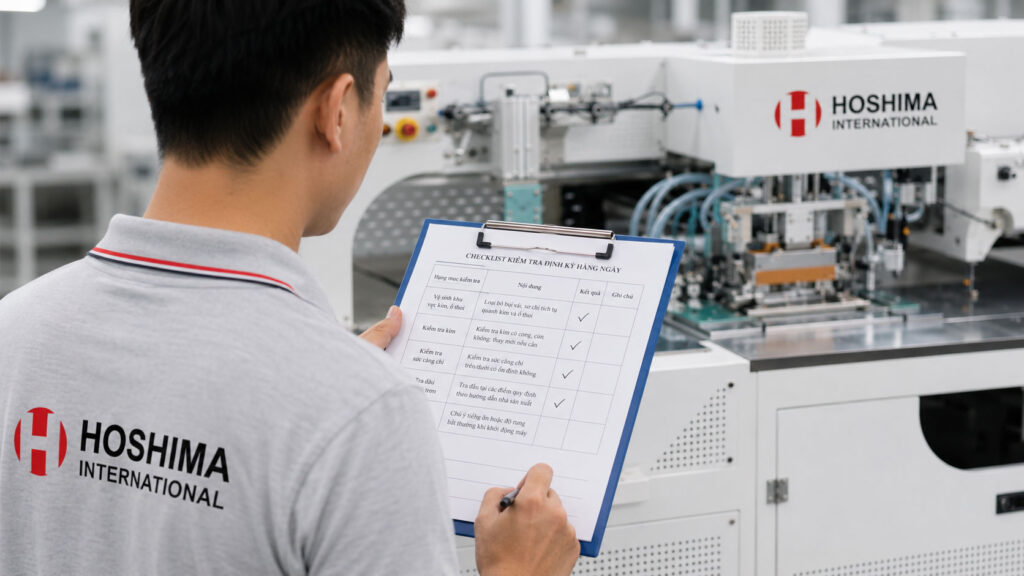
Routine maintenance directly determines a machine’s lifespan, the rate of unplanned breakdowns, and consistent seam quality over time. A clear maintenance schedule broken down by daily – weekly – monthly – periodic frequency helps factory managers proactively catch early warning signs before they escalate into major issues that halt the production line.
📖 Many common operating errors (thread breaking, skipped stitches, vibration…) can be prevented by following a proper maintenance schedule. See also: “5 Common Industrial Sewing Machine Errors and How to Fix Them”
Maintenance Schedule by Frequency
1. Daily Checklist (start or end of shift)
| Check item | Details |
|---|---|
| Clean needle and hook area | Remove accumulated fabric dust and thread lint around the needle and hook |
| Inspect needle | Check for bending or bluntness; replace if needed |
| Check thread tension | Verify upper/lower thread tension is stable |
| Apply lubrication | Oil at designated points per the manufacturer’s instructions |
| Listen for operating sound | Note any unusual noise or vibration when starting the machine |
2. Weekly Checklist
| Check item | Details |
|---|---|
| Deep-clean hook area and feed dog | Remove accumulated fabric dust deeper within moving parts |
| Inspect feed dog | Check for uneven wear affecting fabric feeding |
| Inspect drive belt | Check tension and wear on the belt (for belt-driven machines) |
| Inspect presser foot | Check whether presser foot pressure remains appropriate for the fabric being sewn |
3. Monthly Checklist
| Check item | Details |
|---|---|
| Re-tighten screws and bolts | Check and re-tighten points that may have loosened from accumulated vibration |
| Inspect electrical system | Check wiring, plugs, and electrical contact points |
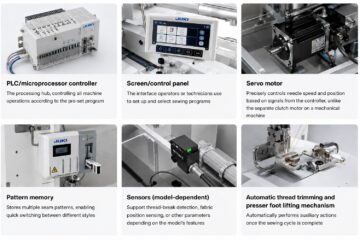
| Clean motor and cooling fan | Especially important for electronic/programmable machines to prevent overheating |
| Check needle-hook timing | Inspect timing between needle and hook, recalibrate if misalignment is found |
4. Periodic Maintenance Every 6 Months / 1 Year (recommended with a qualified technician)
| Check item | Details |
|---|---|
| Comprehensive overall maintenance | Inspect all mechanical and electronic components of the machine |
| Full lubricant replacement | Replace lubricant throughout the entire system per manufacturer recommendations |
| Recalibrate parameters (programmable/SPM machines) | Check and recalibrate settings to ensure precision |
| Assess component lifespan | Plan replacement of components showing wear before failure occurs |
The Factory Manager’s Role in Maintenance Oversight
- Assign clear responsibilities: daily/weekly checklists should be performed directly by machine operators; monthly/periodic checklists should be overseen by a technical team lead or dedicated maintenance staff.
- Keep maintenance records per machine: helps track maintenance history and quickly identify machines with abnormal breakdown frequency for reinvestment evaluation.
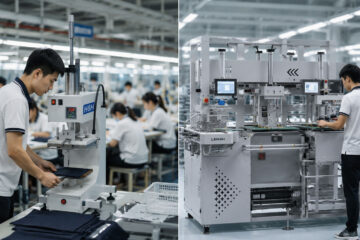
- Train operators: especially for SPM/specialized machines, operators should be trained on the correct basic daily maintenance procedures provided by the supplier.
- Plan an annual maintenance budget: forecast spare parts, lubricant, and technician service costs for major periodic maintenance sessions.
Maintenance Cost vs. Major Repair Cost
Investing time and cost in routine maintenance is always more cost-effective in the long run than waiting for a breakdown before repairing. Common consequences of skipping routine maintenance include:
- Unplanned breakdowns that halt the production line, directly affecting delivery schedules.
- Repair costs significantly higher than preventive maintenance costs (particularly for circuit-related faults on electronic/programmable machines).
- Reduced overall machine lifespan, requiring earlier-than-planned replacement.
- Impact on seam quality, increasing defect rates and rework costs.
Frequently Asked Questions
A comprehensive overall service (with a qualified technician) should be performed every 6 months to 1 year, combined with daily/weekly/monthly checklists performed regularly by operators and the technical team lead.
Yes. Daily checklist items (cleaning, needle inspection, lubrication, thread tension checks) can all be performed by trained operators without requiring a specialized technician.
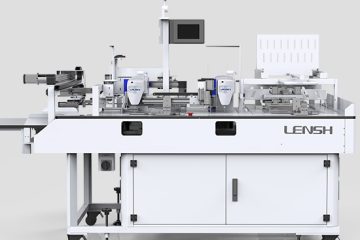
Yes. Special Purpose Machines (with integrated AI, sensors, or jig/fixture/template systems) typically have additional maintenance requirements beyond the basic checklist — refer to the specific supplier’s documentation for each machine model.
Contact us in Southeast Asia - South Asia:
- Singapore: 7 Temasek Boulevard, #43-01A Suntec Tower One, Singapore 038987.
- Vietnam - Philippines - Thailand - Cambodia: Unit 1, 3rd Floor, Building H, Street 17, Tan Thuan Export & Processing Zone, Tan Thuan Ward, HCMC, Vietnam.
- India: Sy. No. 23/8, Ground Floor, Masthappa Layout, Near Yashas Vidya Kendra School, Somashettyhalli, Chikkabanavara Post, Bangalore - 560090 , Karnataka, India.
- Bangladesh: Mizan House, 6th Floor, Flat 6/A, House 6, Road 2, Lane 1, Block G, Halishahar H/E, Chattogram, Bangladesh.
- Phone: (+84) 0983 309 910 (WhatsApp, WeChat, Zalo)
- Email: marketing@hoshima-int.com
- LinkedIn | Facebook | YouTube: Hoshima International