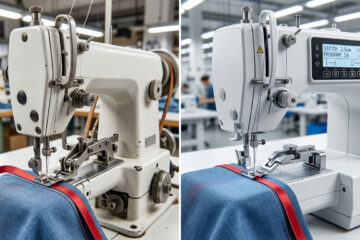
1-Needle vs 2-Needle Industrial Sewing Machine: Which One Should Your Export Garment Factory Choose?
22/07/2026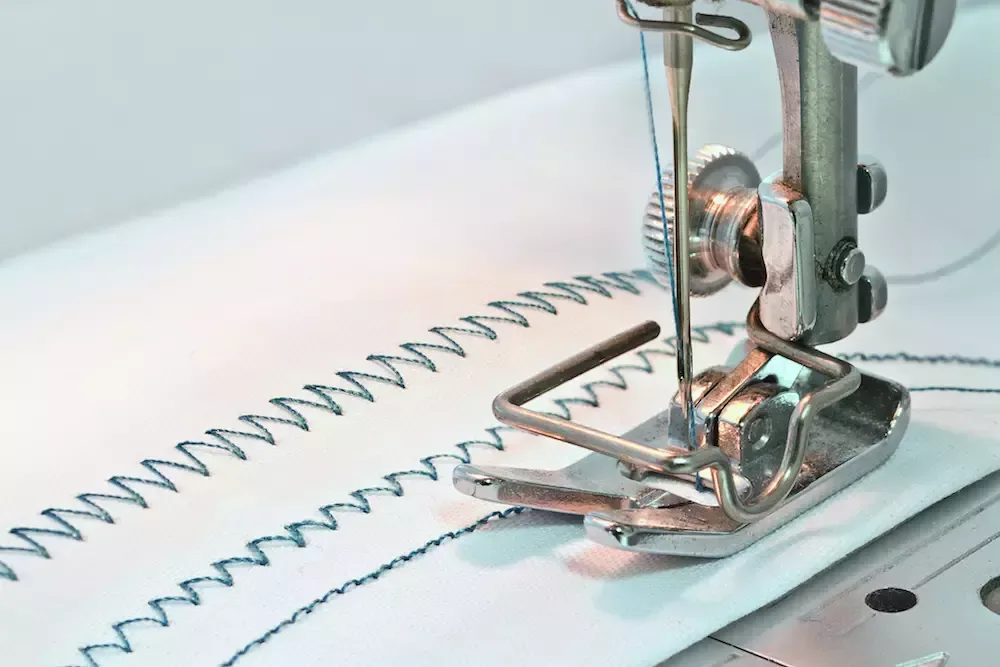
A single-needle sewing machine sews one line of stitching, suited to most basic seam types. A double-needle (2-needle) sewing machine sews two parallel lines of stitching in a single pass, typically used for seams that require higher durability or a decorative finish — such as belt loops (passant), pocket edges, or the double-stitch lines seen on denim and jackets.
Core Differences Between Single-Needle and Double-Needle Machines
| Criteria | Single-Needle Machine | Double-Needle Machine |
|---|---|---|
| Stitch lines per pass | 1 line | 2 parallel lines |
| Common applications | Body assembly, basic seams, versatile for most operations | Belt loops, pocket edges, double-stitch lines on denim/jackets, high-durability details |
| Seam durability | Good for most standard garments | Higher, better tensile strength thanks to two parallel stitch lines |
| Flexibility | Highly versatile, usable across many product types | More specialized, mainly for fixed double-stitch operations |
| Investment cost | Lower | Higher |
| Priority for a new factory | Invest first (foundational machine) | Add as needed once orders require double-stitching |
When Should an Export Garment Factory Invest in a Double-Needle Machine?
For export-oriented factories, the decision to invest in double-needle machines should be based on product type and buyer requirements, not treated as a default choice for every factory:
- Invest in double-needle machines if:
- The factory takes on denim, jacket, or workwear orders — product categories that typically require double-stitch seams for durability and appearance.
- Buyers (especially international brands) specify technical standards requiring double-needle stitching at certain points (pocket edges, belt loops, hems).
- The volume of orders requiring double-stitch seams is large enough to keep the machine fully utilized.
- May not need to invest right away if:
- The factory mainly produces basic T-shirts or shirts — these products typically don’t require double-stitching in many areas.
- Orders requiring double-stitch seams represent only a small share of production — outsourcing this specific operation may be more practical than investing in a dedicated machine.
A Practical Investment Strategy for Export Factories
For most export garment factories, single-needle machines remain the mandatory foundation due to their versatility across most operations. Double-needle machines should be added in proportion to the actual order mix — for example, if 30% of orders are denim/jackets requiring double-stitching, the factory can invest in double-needle machines at a corresponding ratio of its total line machinery.
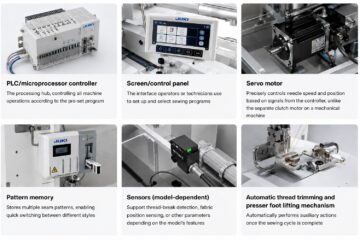
📌 Note: both single-needle and double-needle machines come in mechanical and programmable (electronic) versions. If your factory needs consistent seams, high speed, and stability across large batches, consider the programmable version. See also: “What Is a Programmable Sewing Machine? Should You Upgrade From Mechanical Machines?”
Frequently Asked Questions
Can a double-needle machine fully replace a single-needle machine? No. Double-needle machines are specialized for fixed double-stitch operations, while single-needle machines are more versatile for the majority of standard assembly operations. Most factories need both, with single-needle machines making up the larger share.
Is a double-needle machine significantly more expensive than a single-needle machine? Double-needle machines typically cost more than single-needle machines in the same tier, due to their more complex construction (two needles, two bobbin systems). The exact price gap depends on the brand and features (mechanical vs. electronic).
Which machine type should a newly established small factory prioritize? Prioritize single-needle machines as the foundation first, since they serve the widest range of operations. Double-needle machines should be added later, once the factory has confirmed orders requiring double-stitch seams, to avoid over-investing in unused capacity.
Planning machinery investment for your export garment factory and need guidance on the right single-needle/double-needle ratio for your order mix? Contact our technical team for support.
Contact us for a consultation or to schedule a machine demo at our showroom:
-
Phone: (+84) 0983 309 910 (WhatsApp, WeChat, Zalo)
-
Email: marketing@hoshima-int.com
-
LinkedIn | Facebook | YouTube: Hoshima International
Hoshima specializes in automation solutions for the garment industry, offering:
- Smart Warehousing
- Fabric Defect and Color Inspection
- Automated Cutting Line
- Sewing Technology
- Sub-process/ PPA Automation
- Finishing Technology
- Smart Logistic