How to Save Fabric in Garment Manufacturing: 3 Real-World Tips to Reduce Fabric Wastage by up to 5%
11/06/2026Hi everyone! If you are managing an apparel factory or running production floor costs, you definitely know this brutal truth: fabric costs always consume 60% to 70% of the total garment order value. Just saving a mere 1% to 2% of your fabric consumption can retain hundreds of thousands of dollars for your business bottom line annually. Many owners assume that reducing fabric wastage is strictly the responsibility of the spreading and cutting operators—believing that if they are careful and skillful, the fabric will be saved. However, years of on-floor factory experience have given me a completely different perspective: human operators always have limits and inevitable error margins. Today, I want to share some practical insights on how to save fabric in garment manufacturing, focusing on how introducing automation technology can completely rewrite your cost sheet.
Where Do the Bottlenecks Causing Fabric Waste and Loss Come From?
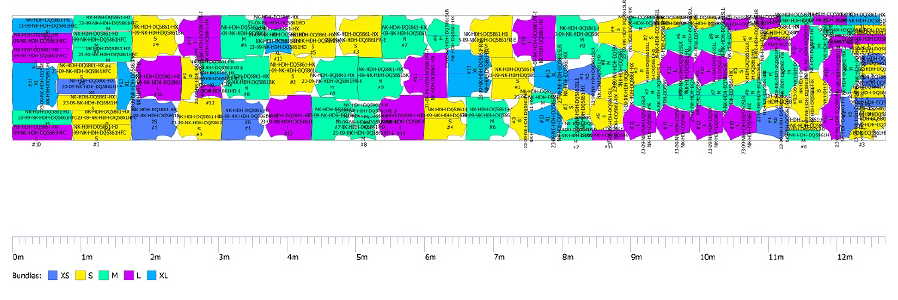
Cosma Technology High-efficiency nesting system
Before looking into how to save fabric in garment manufacturing, we must pinpoint exactly where our material is “disappearing” across the traditional floor. In conventional manufacturing, fabric loss typically stems from three major pain points:
-
Manual Marker Making: Operators manually arrange pattern pieces (front panels, back panels, sleeves, pockets) on a long sheet of paper. Because it is done entirely by human eye, it is incredibly difficult to find the absolute tightest nesting configuration, leaving massive empty gaps.
-
Over-Cutting and Excessive Buffers: When a cutter guides a manual straight-knife machine through heavy denim or highly elastic knit fabric, the fabric layers easily shift. To prevent cutting errors, cutters intentionally leave a wide cutting margin (known as a safety buffer), which unintentionally wastes an enormous amount of fabric.
-
Unannounced Fabric Defects: It is incredibly common to discover a hole or a dye streak right in the middle of a panel only after the fabric is spread or cut. When this happens, the entire section becomes useless, forcing the team to recut parts—causing severe material waste.
3 Most Effective Ways on How to Save Fabric in Garment Manufacturing Using Automation Technology
To strictly achieve saving raw materials in apparel industry, transitioning to automated machinery and intelligent software is the shortest and most reliable path. Here are 3 practical solutions that modern garment exporters are implementing successfully.
1. Optimizing Fabric Cutting Markers with Intelligent Computer Software
Instead of letting humans play “Tetris” with physical paper patterns, modern factories utilize specialized fabric marker making software.
-
How it works: You simply input your digital pattern pieces into the computer system. The software executes thousands of algorithmic permutations within seconds to automatically rotate, flip, and nest the pieces into the fabric width with the absolute highest density.
-
Real-world efficiency: Computerized nesting can instantly boost your fabric utilization rate by 1.5% to 3% compared to your most experienced manual marker maker. This stands as the quickest, most immediate fabric wastage reduction solution for garment factories.
2. Reducing Fabric Wastage via Zero-Buffer Cutting Technology
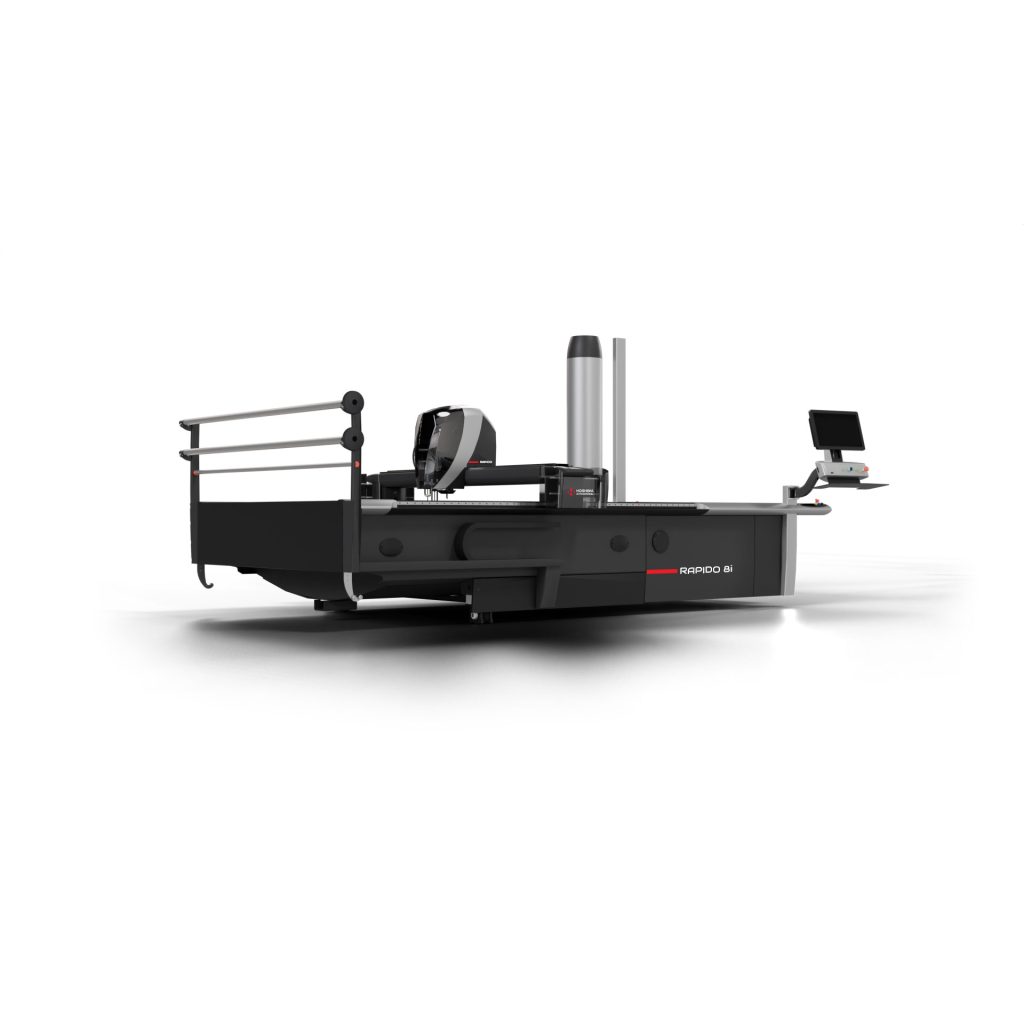
Automated Fabric Cutting Machine – Hoshima Rapido
When you transition from manual hand-cutting to a high-ply automatic fabric cutting machine, you unlock a revolutionary manufacturing concept: “Zero-Buffer Cutting.”
-
How it works: An automatic cutter uses a high-powered vacuum stabilization system to compress and lock the fabric lay perfectly flat against the bristle surface. The ultra-durable oscillating knife then glides precisely along the pre-programmed CAD coordinates. Because the fabric cannot shift even by 1 millimeter, the machine allows two adjacent panels to share a single cut line (meaning the distance between them is exactly 0 mm).
-
Real-world efficiency: Eliminating the traditional safety buffer between pattern pieces helps your factory minimize fabric loss by an additional 1% to 2% on every single marker processed.
3. Inspecting Incoming Fabric Defects to Avoid Mismatched Cutting
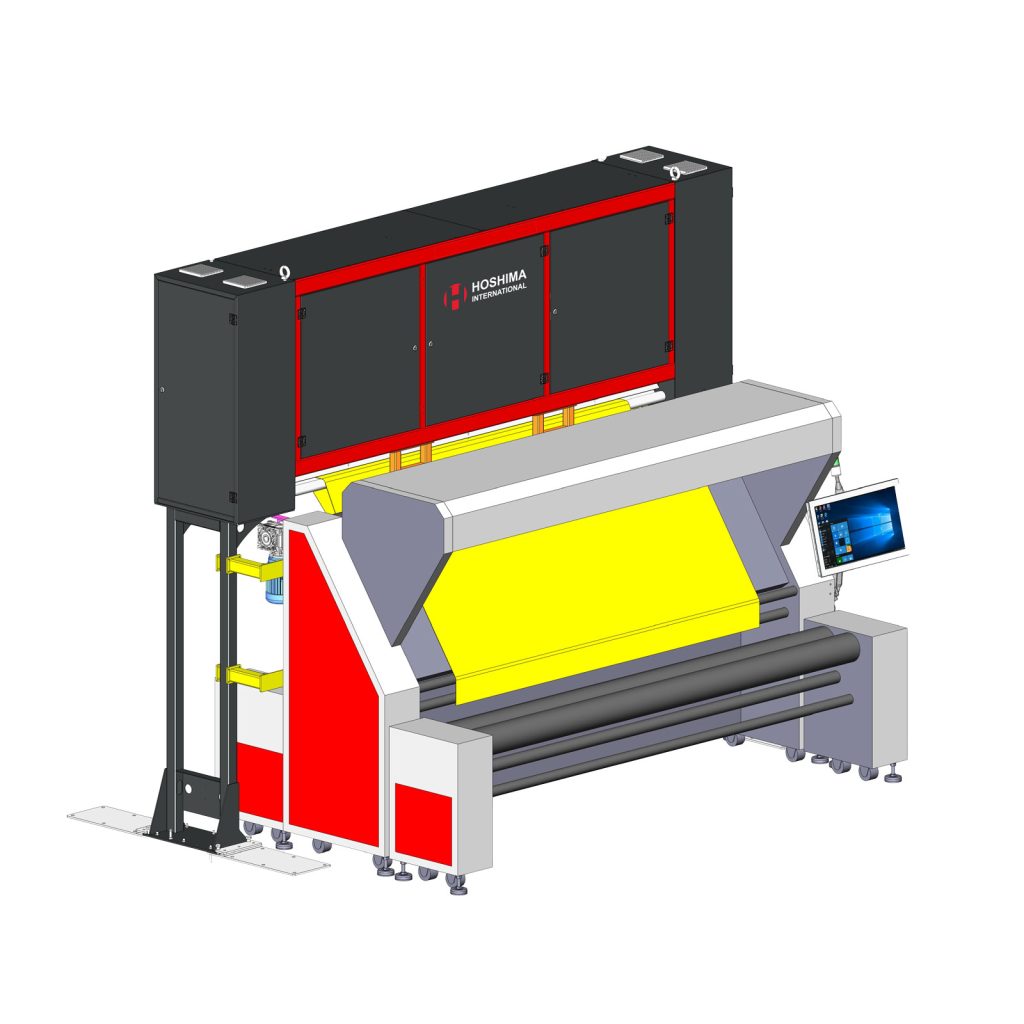
Automatic Fabric Inspection Machine with AI – Hoshima Q-Master
This is a brilliant method for how to save fabric in garment manufacturing using automation technology that many mid-sized factories overlook. Before your rolls even touch the spreading table, they should run through an intelligent AI fabric inspection machine equipped with machine-vision cameras.
-
How it works: The machine automatically scans the running fabric roll, detects structural flaws, slubs, or holes, and digitally maps the exact X-Y coordinates of every single defect.
-
Real-world efficiency: When your marker making software receives this digital defect map, it automatically reroutes the pattern nesting layout, intentionally placing smaller components (like pocket flaps or facings) around the defect while reserving clean fabric zones for major body panels. You will never face the nightmare of cutting an entire bundle only to realize the chest panel has a massive yarn defect.
Industrial Manufacturing QA (People Also Ask)
-
Question: Does a small-scale factory genuinely need an automatic fabric cutting machine to save fabric?
-
Answer: If your factory specializes in high-end, premium garments or expensive technical textiles (like silk or performance sportswear), the machinery pays for itself incredibly fast. However, if your capital expenditure budget is tight, your first step should be investing in intelligent fabric marker making software first. Optimizing your designs on a computer is highly cost-effective and doesn’t require massive physical floor changes.
-
-
Unique Perspective from the Field:
Many factory managers fall into the trap of forcing their spreading operators to pull the fabric as tightly as possible to “stretch” its length, thinking they can squeeze a few extra garments out of the roll. This is a catastrophic mistake! Fabric spread under high tension will naturally snap back and relax after it is cut. This causes the cut panels to shrink drastically, warping your final garment size specifications. Ultimately, the entire shipment gets rejected by QA. True optimization relies on letting the fabric relax naturally (fabric relaxation) and letting software handle the tight nesting—never “stretching” the material.
Glossary of Technical Apparel Terms Used in this Article
To help you seamlessly communicate with your factory engineers, here are simplified explanations of the technical terms used in this guide:
-
Marker Making: The process of arranging digital or physical pattern pieces of various sizes onto a specific fabric width to achieve the maximum possible fabric utilization.
-
Fabric Wastage: The percentage or raw amount of fabric thrown away during production, including the remnant scraps between cut panels, end-of-roll roll remnants, or defective fabric zones.
-
Zero-Buffer Cutting: An advanced automated cutting method where pattern pieces are nested directly against one another, sharing a single cut path without requiring any empty safety clearance between them.
-
Fabric Lay: Multiple layers of fabric precisely spread and stacked on top of one another on a cutting table, allowing a machine to cut dozens of garments simultaneously in a single cycle.
Contact us for a consultation or to schedule a machine demo at our showroom:
-
Phone: (+84) 0983 309 910 (WhatsApp, WeChat, Zalo)
-
Email: marketing@hoshima-int.com
-
LinkedIn | Facebook | YouTube: Hoshima International
Hoshima specializes in automation solutions for the garment industry, offering:
- Smart Warehousing
- Fabric Defect and Color Inspection
- Automated Cutting Line
- Sewing Technology
- Sub-process/ PPA Automation
- Finishing Technology
- Smart Logistic